
Noteworthy Videos / August 14,2020
ECON 101 with Dr. Art Laffer
Take a couple of minutes to brush up on your free market knowledge with a crash course from Dr. Laffer.
Take a couple of minutes to brush up on your free market knowledge with a crash course from Dr. Laffer.
It’s a fact: economists know that monetary policy caused the Great Depression. The economy of the late 1920s was overheated with a bloated stock market—caused by excessive tax cuts for the rich, unsupervised banks and overleveraged credit. The inevitable reckoning came at the hands of an ultra-conservative Federal Reserve, tight monetary policy and an inflexible gold standard.
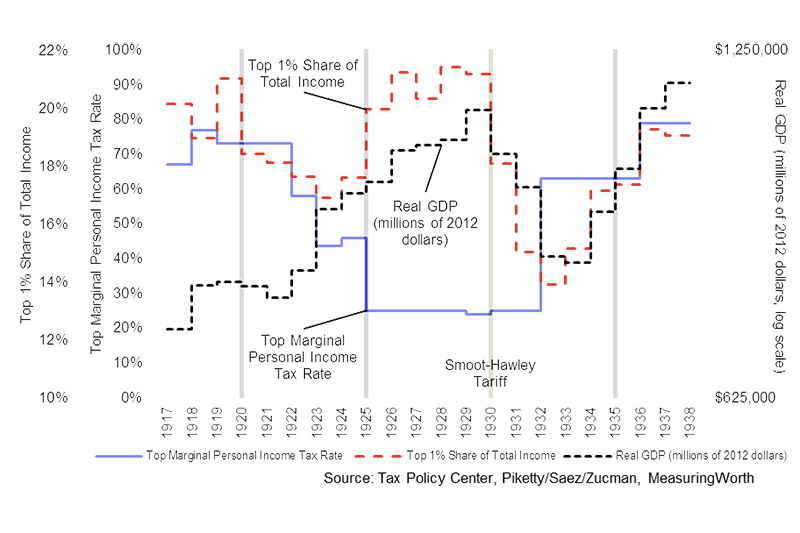
Professor Saez, the Svengali of raising tax rates on the rich, argues that a tax rate of 73% on the top 1% of income earners raises the most revenues. Somehow, he must have overlooked the 1920s when the highest tax rate was cut from exactly 73% down to 25% and revenues exploded as never before.
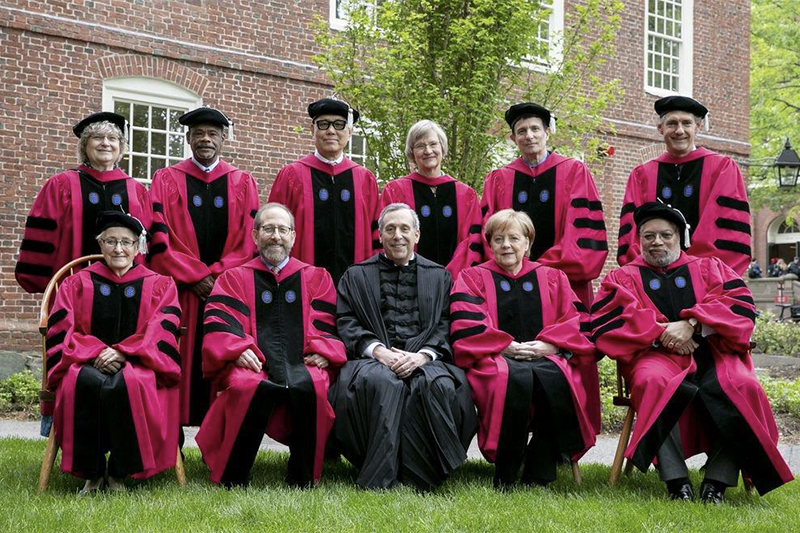
When the recent public health crisis took shape in early March, one of the intriguing events that was postponed until the fall was a debate between Arthur Laffer and Emmanuel Saez on the issues of inequality, top income tax rates, and the possibility of a wealth tax. The debate was to have taken place at Pepperdine University in California. Saez, a proud man of the left, is one of the most prominent economists in the world—recent striking evidence being the honorary degree that Harvard University conferred upon him last year.
In today’s world of political economics, the topic of international trade is only large enough to accommodate two points of view: one that believes in free trade and one that believes in protectionist policies. You’re either in one group or the other. Both pure trade and international finance are vast fields of economics incorporating the highest levels of competence, formal
theoretical skills and math. Any bimodal classification of people’s views and thoughts is grotesquely misleading. Trade theory and its practice is as nuanced as any branch of economics—full of rich, deep theory and empirical research. Treating the topic loosely or superficially is dangerous in the extreme. Let the reader beware. Enter at your own risk.
The voluble discussion over the prospective nomination of Stephen Moore to the Board of Governors of the Federal Reserve
System was undisciplined in many ways, not least in its characterization of the monetary history during the crucial decade of
the 1980s. Bloggers and reporters, especially at the Washington Post, seized upon Moore’s remarks concerning the way Paul
Volcker had conducted monetary policy during the successful latter portion of his chairmanship of the Federal Reserve from
1982 to 1987. Moore contended that Volcker had followed a commodity-price rule, while Catherine Rampell of the Post (who
led the anti-Moore charge) called this “flat-out false.
Federal Reserve Chairman Paul Volcker all but advocated a price rule for monetary policy beginning in the latter half of 1982. He despaired of the major options to a price-rule, namely quantity and interest-rate targeting, and urged that instead, the exchange value of the dollar be given priority in Fed monetary-policy deliberations. In coming to this conclusion, this reorientation of the Fed’s strategy and outlook which occasioned opposition from his board, Volcker sought to reorient monetary policy in anticipation of a major episode of non-inflationary economic growth that appeared to be in the offing as the second year of the Ronald Reagan presidency came to a close.
Currency boards have attracted increasing interest in recent years—and months—because signs of another international monetary crisis are beginning to gather. The prevailing monetary system does not comport with the actual monetary order of the world. Currency boards can, on all important criteria, close the currently yawning gap between the world monetary system and its order. The only risks entailed in currency boards are those associated with the great success and prosperity that they bring without fail.